
Is Vancouver mayor 'shipping' the homeless out for the World Cup? Advocates call Chilliwack mayor's concerns unfounded
Reality is more nuanced, but Judy Graves and Ann Livngston say municipalities do use ‘Greyhound therapy’ and ‘red-zoning’ to push homeless people around
March 30, 2026
It’s an urban myth two decades in the making, some say.
Or is it true? Do “they” clean up the streets of Vancouver before big events by “shipping” unhoused people out to the Fraser Valley?
Like any urban myth or ongoing cultural trope or conspiracy theory, there is a kernel of truth. It’s a little bit true.
Reality, as usual, is more nuanced.
‘Chilliwack is full’
At the last meeting of Chilliwack city council, Mayor Ken Popove issued a public message to the mayor of Vancouver Mayor Ken Sim.
“My message to Mayor Sim and to BC Housing is ‘Chilliwack is full,’” Popove said.
“We can’t accept any more folks in our area here.”

Want to support independent journalism?
Consider a one-time donation or subscribe for less than $1 a week so I can continue this work.
He said that the municipality has advocated strongly for fair and equitable supportive housing units, and they have indeed been built in Chilliwack.
But it can’t just be here. In the past six months or so, however, four supportive housing projects have been turned down in other communities.
“One in Richmond,” he said. “One in Burnaby. Abbotsford council just shut one down as well. And there was one proposed for New West that kind of teetered on the brink of going ahead [or] not going ahead.”
Speaking a few days after that council meeting, Popove said Chilliwack has the highest number of supportive units per capita while other communities aren’t taking their share.
The “highest” claim has not been verified here.
“Build it and they will come,” he said, adding that “I own some of that because I pushed for the supportive housing units…. Because I wanted to look after MY people. We advocated hard but we are full to the brim.”
Popove pointed to a story from 2023 when a Union Gospel Mission (UGM) was seen and recorded on video dropping people off in downtown Chilliwack. He called it “disheartening” to see the video and he reached out to the head of the Union Gospel Mission.
In that case, just one anecdote shared from a video on social media, the head of UGM clarified that the individual they were helping with transportation, was coming from a Mission shelter with a friend, and had asked UGM people for a ride to Chilliwack to meet a prospective landlord, and possibly find work.
“We would never ever drive someone somewhere without a specific plan in mind,” Nicole Mucci told The Progress.
As usual, it’s more complicated
Advocates for unhoused people in the Lower Mainland disagree with Popove’s over-simplification of the matter. Some more than others.
In conversations with well-known advocates Judy Graves and Ann Livingston after speaking with Popove, Graves called the mayor’s claim that Vancouver is shipping people to the Eastern Fraser Valley an “urban legend.” Livingston called it “bullshit.”
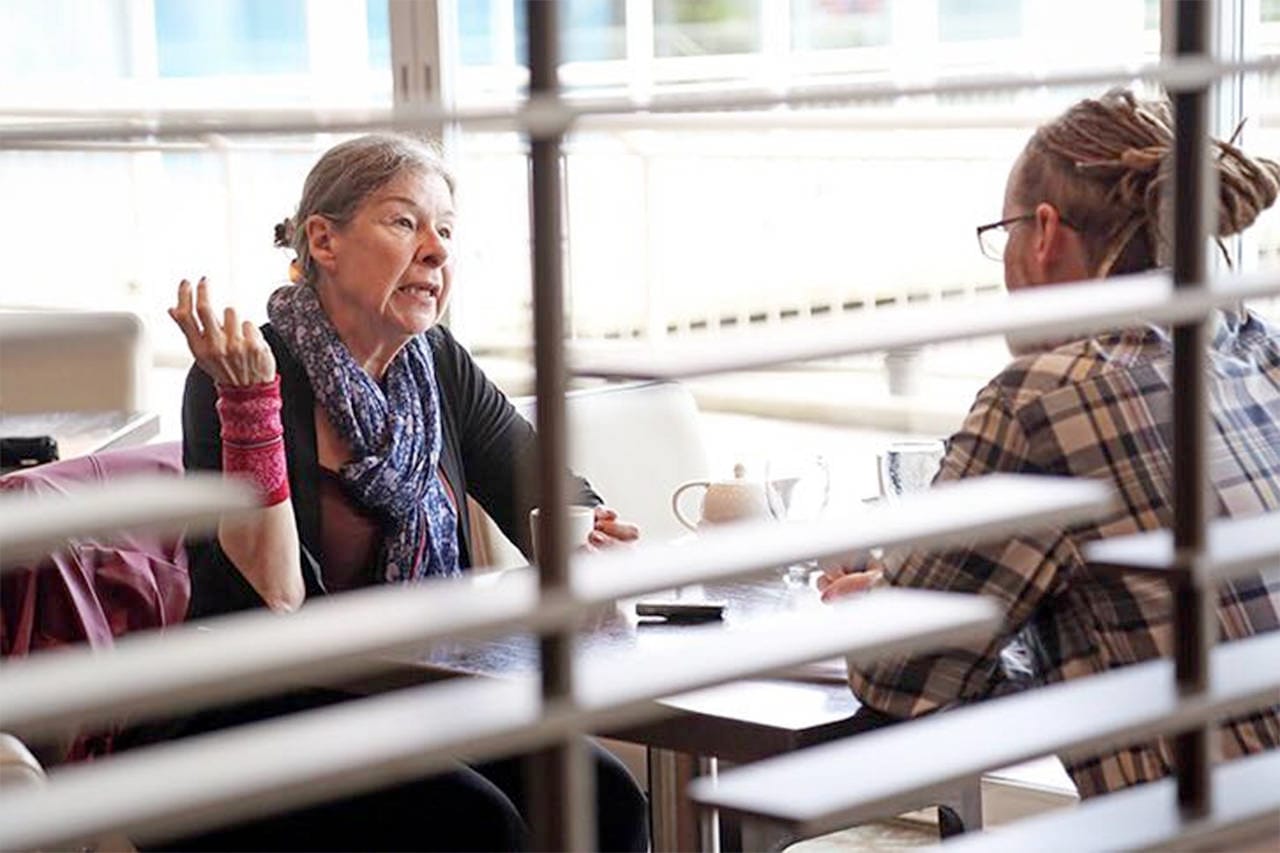
However, both agreed that people move around the region, sometimes are moved around the region, sometimes with incentives, bribes, and legal manoeuvres.
Graves said people might be surprised how many of the indigent and unhoused members of the community are actually from that community.
“It is years now since I spent time with the homeless in Abbotsford, but when I did, I surveyed where they lived prior to homelessness,” Graves told me.
“In Abbotsford, almost all had been born in Abbotsford or were adopted into Abbotsford as infants. The rest had been working in Abbotsford for 20-to-30 years. People look different when they become homeless and lack access to showers, laundry, etc. But they are likely to have been indistinguishable from the rest of the population when they were still able to live indoors.”
Some advocates on the streets of Chilliwack disagree somewhat, saying that police in Surrey and Vancouver often ship people to other communities.
Graves said she and other advocates were able to move many people indoors in the lead-up to the 2010 Olympics and the huge tent providing good food in Oppenheimer Park in the Downtown Eastside (DTES) kept people anchored and relatively comfortable.
She did share anecdotes that people were shipped to the DTES from elsewhere. During the homeless count in 2005, Graves was searching CRAB Park with then-mayor Larry Campbell and they woke a number of people up who had the same story: the night before, police in Burnaby rounded them up and put them on SkyTrain to Vancouver at the behest of that city’s mayor so they wouldn’t be included in their homeless count.
“So we know it can happen,” she said, adding that if Mayor Sim attempts a version of “Greyhound therapy” he wouldn’t get away with it because word would get out quickly.
“And in fact, I did not hear of people being displaced to Chilliwack or Abbotsford during the Olympics 2010.”
‘Red-zoned’ out of town
“‘Shipping’ is a B.S. term,” Ann Livingston told me when I asked her about the alleged practice. Livingston is a prominent harm-reduction activist in the Downtown Eastside, co-founder of VANDU (the Vancouver Area Network of Drug Users).
“Unhoused people are frequently issued bench warrants for non-payment of municipal tickets and are arrested. When arrested, the court may then red zone them from the city.”
A “red zone” or, using it as a verb, to “red zone” someone refers to the criminal justice practice of issuing no-gos to certain locations, areas and, in extreme examples, entire cities.
A common use of a red zone or “no go” is when an accused is convicted of an assault or harassment they are forbidden from going near the victim or where the person is likely to be.
In child sex offender or child porn cases, convicted people are usually also banned from being near schools, parks, playgrounds, places where children are likely to be.
In downtown Vancouver, Simon Fraser University (SFU) geography professor Nicholas Blomley has researched how street-entrenched marginalized people are often arrested, charged with something minor or fined under bylaws. As part of a release plan receive court-imposed red-zone bans, a practice he says only increases - and in fact invents – crime, marginalizes people further, but it is illegal.
Livingston and Blomley took part in a February 2020 talk at SFU as part of the Dean’s Lecture Series in which they address red zones, how they punish the poor, generate crime, and break the law.
In the talk, Livingston says in 2008 Vancouver started giving out bylaw infraction tickets to people in the downtown area so that when they were left unpaid by homeless people 18 months or so later, they could arrest them just as the Olympics were starting and red-zone them to clear out the neighbourhood.
“We complained like hell at VANDU and we got 800 of the tickets reversed,” Livingston said.
“I met people in Abbotsford and the ‘Wack who were red-zoned by the court from Vancouver. I was puzzled when members of our drug-user groups told me they were barred from Vancouver.”
Livingston said she has never seen an evidence of “shipping” people out of town, but she’s heard stories of police in New Westminster taking “working girls” to the border with Burnaby to drop them off. She said a friend of hers was once driven out of Nanaimo by police while suffering from a psychosis and she was left at the city limits.
“Back in the day, I heard of welfare encouraging people to go back to their home communities if they wanted to, with bus tickets.”
People don’t not want housing
Graves says nobody comes to one city from another specifically in search of supportive housing because it is so tightly controlled. There are long wait lists.
“Essentially, a person has to die in the housing before another person moves in, and everyone in street is way too aware of that,” Graves said.
In response to Mayor Popove’s “build it and they will come” comment about how Chilliwack has more housing here than most, she says that’s simply irrelevant.
“Don’t build it and they will come, too,” Graves said. “They will come because there is nowhere for them to go. Nowhere where there is a real possibility of finding a room at welfare rates.
“If there are people coming from Vancouver, they will be coming to escape the street scene here in the DTES, Granville Street, Yaletown.”
There is often a sentiment that some people on the streets want to be there. In Graves’ experience, that’s not true. The reality is that finding low-barrier housing, any housing, has been near impossible given the increases in unhoused people.
Imagine living on the streets, constantly needing to fill out paperwork, applying for rooms and being rejected over and over.
“There is a tiny percentage, maybe as many as low as one per cent who actually don’t want to move inside,” Graves said.
“Invariably they are loners, not ever in the tent cities, who suffer from paranoid schizophrenia, or a schizoid personality disorder.”
In Chilliwack, think of the well-known homeless person referred to as “James,” seen for years sitting on a curb along Vedder Road near the malls, later helped and gone to places unknown.
“After working with hundreds of homeless people over decades, I think I could count the ones I’ve encountered [who don’t want a home] on my two hands.”
When told about the closure of the Wellness Centre and its overdose prevention site as of April 1, Graves wondered why it was closing (before I reported on Fraser Health’s reasoning), whether it was provincial cost cutting, a plan to move it elsewhere, or maybe a change in policy direction.
Whatever the reason, closing the day-use portion of the Wellness Centre will not suddenly prompt an exodus of unhoused people.
“It will not cause the people using it to move to another municipality. They will just be grubbier, hungry, and more likely to die.”
-30-
Want to support independent journalism?
Consider becoming a paid subscriber or make a one-time donation so I can continue this work.
Paul J. Henderson
pauljhenderson@gmail.com
facebook.com/PaulJHendersonJournalist
instagram.com/wordsarehard_pjh
x.com/PeeJayAitch
wordsarehard-pjh.bsky.social