‘A freeman off to prison’: 12-year sentence handed to 70-year-old Gary Losch who killed Chelsey Gauthier, buried her in a shallow grave in Mission
Losch’s lawyer asked for six to eight years for manslaughter plus two years for interference with a dead body, Crown asked for 13 years total
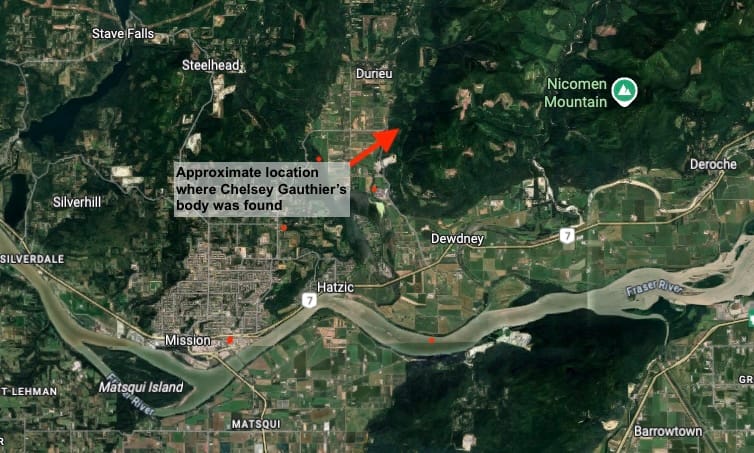
Kasadee York spoke to her close friend Chelsey Gauthier on a mild mid-summer day eight-and-a-half years ago before the 22-year-old Gauthier went with Gary Losch to tend to his cannabis crop hidden in the woods north of Mission, B.C.
York was one of the last people to see Gauthier alive.
The then 62-year-old Losch, on the other hand, was definitely the last person to see the young mother alive. That’s because Losch stabbed Gauthier in the back with such force that it punctured her heart, killing her. What he did next with her will likely never be known, but it ended with him burying her half-naked body in a shallow grave in the woods.
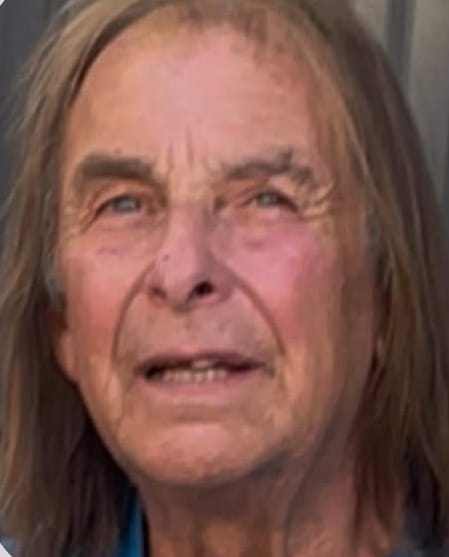
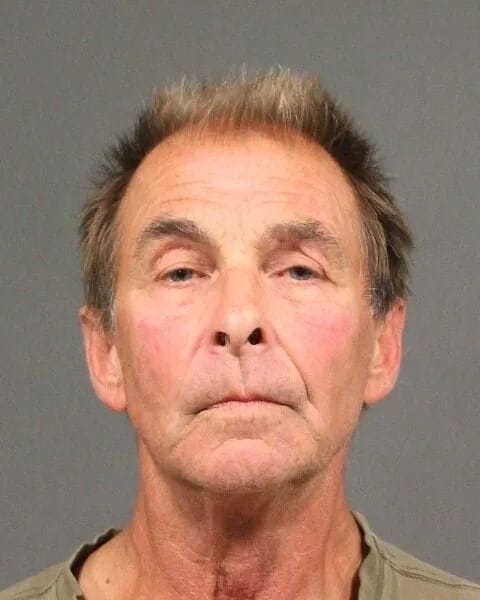

Gary Losch (at left) in a screenshot from a video by Kasadee York, an RCMP mug shot of Losch, and Chelsey Gauthier (Facebook).
Convicted of manslaughter and interference with a dead body, Losch hasn't taken responsibility for his actions even as he fought through tears in the prisoner’s box in courtroom 401 at the Abbotsford Law Courts on Thursday (Dec. 18, 2025). BC Supreme Court Justice Dev Dley was about to pass sentence and asked Losch if he wanted to say anything to the court about killing Gauthier.
“I would just like to say that Chelsea and I were friends,” he said with a quiet, strained voice. “It was a horrible accident that happened.”
He paused for several seconds before continuing.
“I’m very sorry for what happened. I can’t think of anything else I’m just very sorry. I live with this every day. Thank you your honour.”
It was not an accident, as manslaughter requires the mens rea (intent) to be convicted. The charge in the criminal code comes with one of the largest ranges of sentencing from four years for a near accident to life in prison for near murder.
Crown counsel Andrew MacDonald asked for a sentence of 11 years prison for the manslaughter and two years for the interference to run consecutively. Losch’s lawyer said his sentence should be six to eight years for the manslaughter agreeing with the two years for the interference, also agreeing it run consecutive.
A ‘free man’ no more
An odd man with an anti-government paranoia who lived homeless, Losch has spent most of his adult life behind bars or under court-ordered supervision.
Losch claimed to be a ‘freeman on the land,’ somewhat ironically now that he is behind bars. The movement is a nonsensical anti-government conspiracy theory.
Losch had been living in Chilliwack out on bail since January, something that caused some distress for those who knew what he did and had seen him around the community.
In what amounted to a legal technicality, Crown applied to have that bail revoked in the morning before the sentencing in the afternoon. Losch’s lawyer did not oppose the bail revocation that Crown counsel asked for citing what is known as the tertiary grounds. The three tests for release on bail are primary, secondary, and tertiary. Primary grounds refer to whether the accused will show up for court if released, secondary is to protect against further offences, and tertiary is about maintaining public confidence in the justice system.
The Crown mention of tertiary grounds seemed to be a reference to the community disgust while he was out on bail after being convicted.
In the afternoon, Justice Dley was succinct in reading his decision, describing what happened, the impact of Gauthier’s death on her family, with particular attention on Losch’s claim that he is Indigenous, something that he had no proof of and no report could be created for sentencing since there is no evidence.
Justice Dley agreed with the submissions of two years for the interference and then said 10 years for the manslaughter was suitable to run consecutive.
Before Losch was released on bail in January of 2025, he had spent considerable time in pre-trial custody since Sept. 9, 2022. The 852 days he spent is calculated at a rate of 1.5-to-one, so he is given credit for 1,280 days, close to 3.5 years. This mean his sentence is 8.5 years more, not factoring in statutory release.
Gauthier’s close friend Kasadee York who has campaigned for justice for years for her friend was unimpressed by the sentence.
“Honestly I personally feel that the sentence given does not reflect the gravity of the loss this has had on the family, friends, and our community,” York told Something Worth Reading.
“No sentence would truly be enough. Personally I’d like to thank crown (Andrew and his team) for their dedication and commitment to Chelsey and this case. I’m hoping now we can finally remember Chelsey, for Chelsey. The bright, talented, amazing young mother (amongst many things) she was!”
-30-
Want to support independent journalism?
Consider becoming a paid subscriber or make a one-time donation so I can continue this work.
Paul J. Henderson
pauljhenderson@gmail.com
facebook.com/PaulJHendersonJournalist
instagram.com/wordsarehard_pjh
x.com/PeeJayAitch
wordsarehard-pjh.bsky.social